What is ISO 45001:2018?
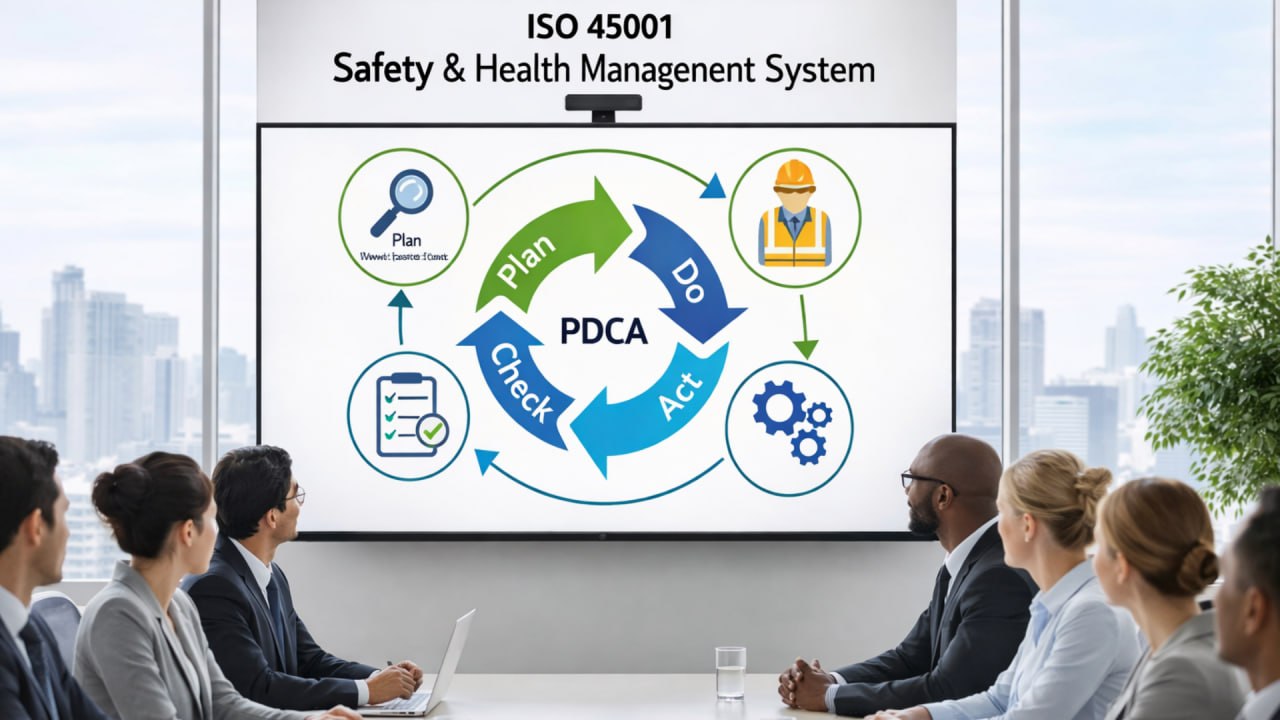
ISO 45001:2018 is an international standard for occupational health and safety (OH&S) management systems aimed at improving employee safety and reducing workplace risks. It provides a framework for organizations to proactively identify and manage health and safety hazards while promoting a culture of safety through strong leadership and worker participation.
By facilitating continuous improvement and ensuring legal compliance, ISO 45001:2018 enhances overall organizational safety performance and employee well-being.
A safer workplace is a more productive one. ISO 45001:2018 makes safety systematic, measurable, and accountable to leadership — not an afterthought.
Importance for Workplace Safety
The International Organization for Standardization launched ISO 45001 in response to a sobering global picture of workplace harm:
ISO 45001:2018 helps organizations of any size or industry minimise workplace accidents, lift productivity, and create a healthier, more engaged workforce.
Advantages of ISO 45001 Certification
ISO 45001 vs. OHSA Audit
ISO 45001 Audit: Assesses whether an organization has implemented an effective management system to proactively manage occupational health and safety risks, reduce workplace injuries, and ensure continuous improvement.
OHSA Audit: A legal compliance audit conducted to ensure that a company adheres to local, regional, or national occupational health and safety laws and regulations (such as OSHA in the United States).
Frequently Asked Questions
How is ISO 45001:2018 different from OHSAS 18001?
ISO 45001 replaced OHSAS 18001 in March 2021. The new standard places stronger emphasis on leadership accountability, worker participation, the operating context, and integration with other ISO management systems through the High-Level Structure.
Do we need to migrate from OHSAS 18001?
OHSAS 18001 certificates are no longer valid. Organizations that previously held OHSAS 18001 must transition to ISO 45001 to maintain a current OH&S certification.
How long does ISO 45001 certification take?
Typical first-time certification takes 3 to 4 months, depending on the maturity of existing safety systems, the number of sites, and the complexity of operational hazards.
Does ISO 45001 satisfy local OH&S laws?
ISO 45001 helps you meet legal requirements but does not replace them. The standard requires organizations to identify and comply with all applicable OH&S legislation in the jurisdictions they operate.
Can ISO 45001 be combined with ISO 9001 and ISO 14001?
Yes, all three share the same High-Level Structure (Annex SL), making integrated implementation efficient. Many organizations operate a single integrated management system covering quality, environmental and safety together.
Create a Safer Workplace Today
Let R STAR GLOBAL guide your organization through every step of the ISO 45001:2018 journey — from hazard assessment to successful certification.
Free Consultation